.webp?language=en)

Culture and heritage as an economic multiplier
The successful embedding of culture in master planning systems helps culture and heritage move beyond identity and become a force multiplier for economic performance. At Diriyah Company, it is reflected in how value is created across the entire development ecosystem - from employment and local enterprise activation to supply chain development and destination differentiation at a global level.
A prime example is the Qurain Cultural District, which will be home to a diverse range of multidisciplinary cultural offerings including a cinema, museums, and several academies focusing on the likes of writing, traditional Najdi architecture and mud building, Arab music, culinary, performing arts and theater and feature offices, retail, residential areas and dining outlets.
According to Diriyah Company projections, the development is expected to create approximately 180,000 jobs and contribute an estimated $18.6 billion to Saudi Arabia's GDP, supporting the Kingdom's Vision 2030 diversification ambitions. As a destination, the culture and heritage of Diriyah will be a significant pillar in welcoming approximately 50 million visits a year in the future.
Diriyah is committed to the circular economy and sustainable development principles and is prioritizing locally sourced materials and domestic production - particularly in areas such as construction, design, and cultural assets.
Culture-led development creates opportunities for local artisans, entrepreneurs, and service providers to participate meaningfully in the destination economy - whether through retail, hospitality, cultural programming, or creative industries.
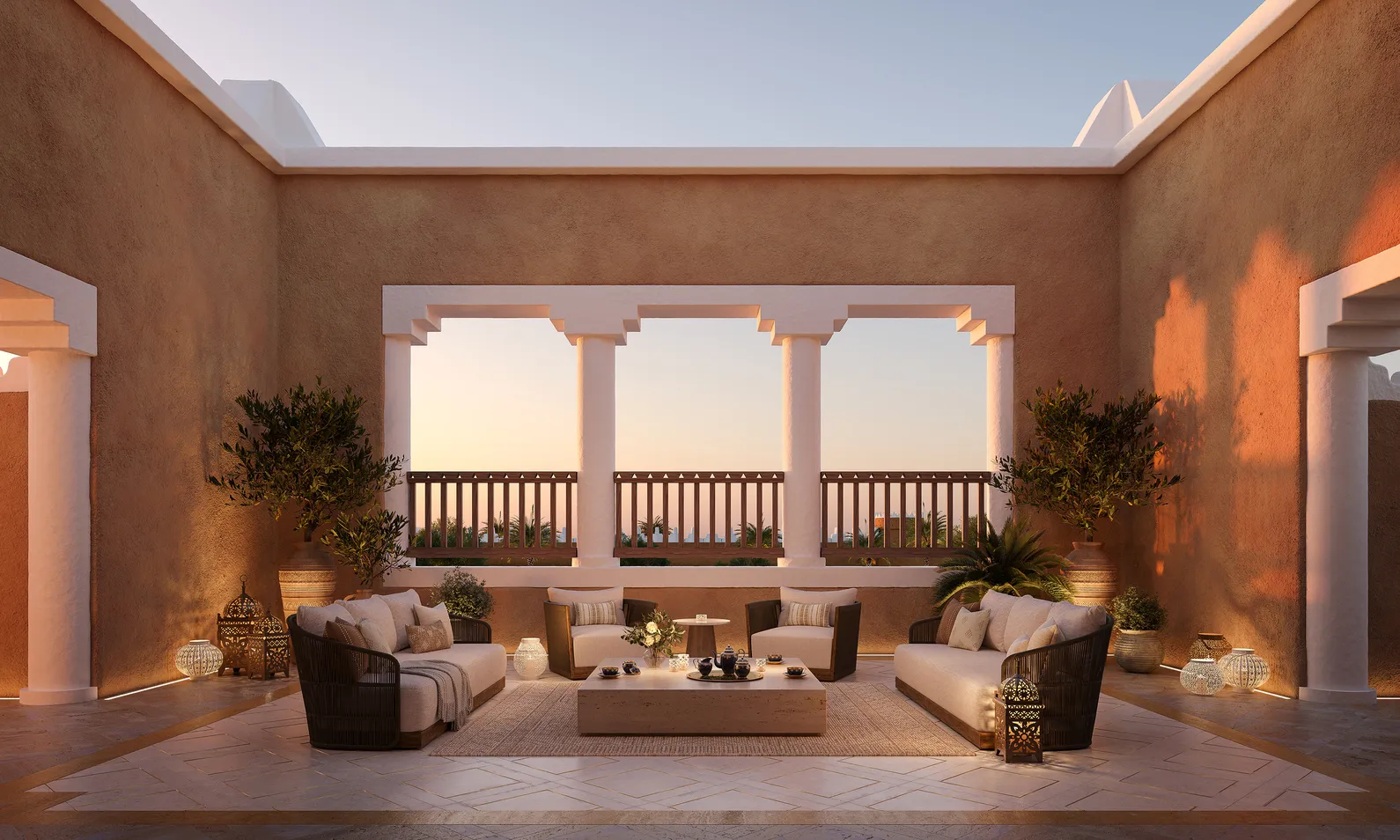
Diriyah has also taken its rich Najdi architectural past and sustainable design principles to embed them into a contemporary development process. The use of more traditional materials and design principles reduces the need for artificial or resource-intensive placemaking, while promoting more environmentally and socially responsible growth.
The integration of local knowledge, traditional building techniques, and climate-responsive design contributes not only to unique cultural continuity, but also to long-term operational efficiency and environmental resilience.
Public-private partnership as cultural stewardship
Delivering a development of Diriyah's scale and complexity needs effective and highly engaged public-private partnerships.
At Diriyah, this begins with the role of Diriyah Company as a master developer that ensures coordination and discipline across a multitude of assets comprising hospitality, retail, residential, cultural, and commercial assets that are planned, integrated, and delivered within a unified development strategy.
A strategy simultaneously anchored in cultural heritage, but executed with the highest global standards in design, engineering, and operational excellence.
For investors, operators, and global brands, the presence of a clearly defined masterplan and governance framework reduces uncertainty and enables long-term decision-making. The market response illustrates the effectiveness of this approach. In recent years, Diriyah Company has established a growing network of strategic travel trade partnerships locally and internationally, including agreements with Abercrombie & Kent, Almosafer, Tetrapylon DMC, 88 Destinations, and Athaar Arabia.
These collaborations are designed to position Diriyah as a leading global cultural destination while building long-term confidence among travel operators, advisors, and international visitors.
34 of the world's leading hotel brands have already committed to Diriyah and Wadi Safar with well advanced construction on multiple properties.
They welcomed clear design codes, material guidelines, and experiential standards, to adapt to the character of Diriyah, rather than impose external templates. The result is a more cohesive and authentic destination, where international excellence and local identity reinforce - rather than compete with - one another.
Lessons for global destinations: embedding heritage into strategy
Diriyah Company's experience offers five clear lessons for destinations seeking to move toward more sustainable, differentiated, and resilient models.
The first is the importance of starting with identity. Culture and heritage cannot be retrofitted into a development once planning is complete; they must inform the vision from the outset. This requires a clear articulation of what makes a place distinct - its history, architecture, environment, and lived cultural practices - and a commitment to embedding these elements into the foundations of development.
The second is integration. Cultural identity must be translated into the systems that shape how a destination functions. These include planning frameworks, design codes, material specifications, and public realm strategies and ensure that identity is expressed consistently across the built environment.
The third is coherence. As destinations grow and diversify, maintaining consistent narrative and spatial logic becomes increasingly important. This requires strong governance, clear development guidelines, and a master-planning and marketing approach that aligns stakeholders around a shared framework.
The fourth is economic activation. Culture and heritage must function as active components of the development model - supporting local enterprise, creating opportunities for small and medium-sized businesses, and contributing to diversified revenue streams. This ensures that cultural identity is not only preserved, but sustained through ongoing economic participation, reinforcing both authenticity and long-term viability.
Finally, there is the alignment of culture with long-term capital. Large-scale destination development requires patient investment and a long horizon, particularly where heritage and identity are central. Aligning investors, operators, and public stakeholders around a shared understanding of long-term value - rather than short-term returns - is essential to delivering outcomes that are both commercially successful and culturally coherent.
Embedding culture and heritage into strategy is not about limiting growth; it is about shaping it more intelligently - ensuring that as destinations scale, they do so with a clear sense of identity, purpose, and long-term value.
The future: Toward regenerative cultural urbanism
As global tourism continues to evolve in an increasingly competitive and complex landscape, scale alone is not enough. Destinations that define the future must be anchored in identity, guided by long-term thinking, and designed to create value that extends beyond economic return.
Diriyah Company is a groundbreaking developer demonstrating how such a shift can be realized on a scale. Proving that when you embed cultural heritage into the foundations of planning, design, and delivery, you create a world-class destination that is globally competitive and rooted in its rich history and heritage.
The destinations that will shape the future of global tourism will not necessarily be those that build the most. They will be those that build with the clearest sense of place. In an increasingly competitive world, lasting advantage will belong to destinations that create value not only through what they build, but through the identity they preserve, the experiences they create, and the legacy they leave behind.